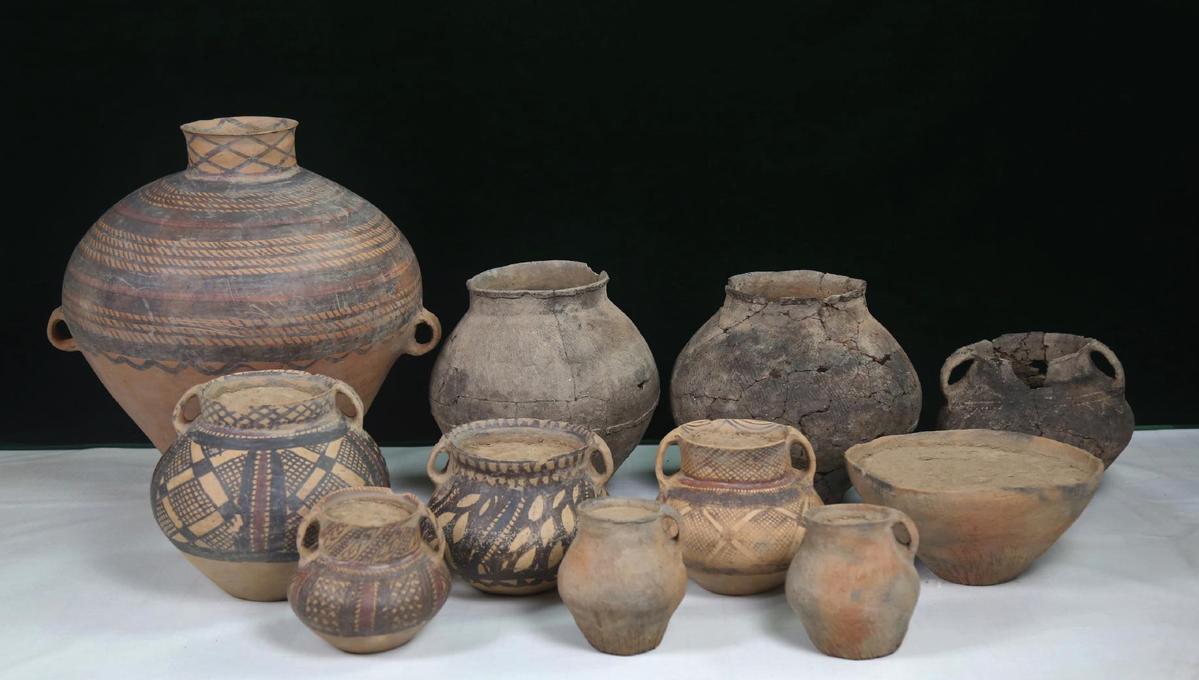
Majiayao Culture
Introduction
Majiayao Culture is an ancient Neolithic archaeological culture that flourished in the upper reaches of the Yellow River and its tributaries, dating back more than 5,000 years. It is considered a significant part of the origin of Chinese civilization, showcasing the artistic and technological advancements of prehistoric societies. The culture is renowned for its painted pottery, which features intricate patterns and vibrant designs, and reflects the sophistication of early Chinese craftsmanship. Majiayao Culture is named after the Majiayao Site in Lintao county, Gansu province, where it was first discovered.
Discovery and Naming
The Majiayao Culture was first identified in 1924 by Swedish archaeologist Johan Gunnar Andersson during his investigation of cultural ruins in Majiayao village, Gansu province. Andersson uncovered sophisticated painted pottery in various shapes, which led to the naming of the culture. In the 1940s, prominent Chinese archaeologist Xia Nai officially named the ruins the Majiayao Culture. The discovery marked a milestone in the study of Chinese prehistoric archaeology and highlighted the artistic achievements of ancient societies in the region.
Chronology
The Majiayao Culture spans a period of approximately 4,000 to 4,800 years ago. It is divided into three distinct cultural phases: Majiayao, Banshan, and Machang. The Majiayao phase, dating back around 4,800 years, is characterized by orange pottery with refined decorations and patterns. The Banshan phase, around 4,500 years ago, represents the peak of painted pottery art, with red pottery dominating and intricate designs such as spirals and zigzags. The Machang phase, approximately 4,000 years ago, introduced more diverse pottery models and patterns, reflecting advancements in craftsmanship and artistic expression.
Geographic Distribution
The Majiayao Culture primarily developed in the south-central area of Gansu province, with its center on the Loess Plateau in western Gansu. Its distribution extended from the upper stream of the Weihe River in the east to the Hexi Corridor and northeast Qinghai in the west, and from southern Ningxia in the north to northern Sichuan in the south. The culture's area encompassed the Yellow River and its tributaries, including the Taohe River, Daxia River, and Huangshui River. The geographic spread of Majiayao Culture highlights its influence across a vast region of northwestern China.
Characteristics
Pottery
Pottery is the hallmark of Majiayao Culture, showcasing a wide variety of shapes, designs, and colors. Majiayao pottery is predominantly orange and features smooth lines, bright colors, and intricate patterns such as vortexes, water waves, and concentric circles. During the Banshan phase, red pottery became dominant, with delicate designs outlined in red and black lines. The Machang phase introduced more diverse pottery models, including single-ear cylindrical cups with handles, reflecting further advancements in pottery-making techniques.
Decorative Patterns
The decorative patterns on Majiayao pottery are highly sophisticated and include spirals, zigzags, diamonds, gourds, mesh patterns, and human figures. These designs are often symmetrical and painted with mineral pigments. The patterns reflect the artistic creativity and cultural significance of the Majiayao people, serving both aesthetic and symbolic purposes.
Tools and Artifacts
In addition to pottery, Majiayao Culture produced various tools and artifacts, including stone tools, pottery drums, and semi-manufactured goods. The pottery drums, considered the earliest percussion instruments, highlight the cultural and musical achievements of the society. The tools and artifacts demonstrate the advanced craftsmanship and technological capabilities of the Majiayao people.
Cultural Significance
Majiayao Culture holds immense cultural significance as a representation of early Chinese civilization. Its painted pottery is considered the pinnacle of prehistoric ceramic art, showcasing the artistic brilliance and technical mastery of ancient societies. The culture also played a crucial role in early cultural exchanges between China and neighboring regions, contributing to the development of trade and communication networks. The Majiayao people's emphasis on handicrafts and commerce highlights their innovative and adaptive approach to societal development.
Related Archaeological Sites
Several archaeological sites associated with Majiayao Culture have been discovered, including the Siwa Site in Lintao county, Gansu province. The Siwa Site features a central settlement with a triple-layered moat system, residential foundations, pottery kilns, and tombs. These findings provide valuable insights into the social organization, economy, and cultural practices of the Majiayao people. Other sites, such as those in Qinghai and Ningxia, further illustrate the geographic spread and influence of the culture.
Influence and Legacy
The influence of Majiayao Culture extends beyond its geographic boundaries, with similarities observed in the painted pottery of Central Asia, the Harappan culture of India, and the Cucuteni-Tripolye culture of the Black Sea region. These parallels suggest early cultural exchanges and interactions between China and other regions. Majiayao Culture also laid the foundation for subsequent cultural developments in western China, contributing to the diverse yet integrated origins of Chinese civilization.
Research and Studies
Research on Majiayao Culture has been extensive, involving archaeological excavations, academic symposiums, and international collaborations. Scholars have studied the decorative patterns, pottery-making techniques, and cultural significance of Majiayao artifacts. Recent discoveries, such as the Siwa Site, have provided new insights into the settlement patterns and economic activities of the Majiayao people. International cooperation, including studies with Romanian archaeologists, has further enriched the understanding of Majiayao Culture and its connections to other prehistoric societies.
Majiayao Culture remains a vital subject of study for archaeologists and historians, offering a window into the artistic, technological, and cultural achievements of ancient China. Its legacy continues to inspire appreciation for the richness and diversity of Chinese civilization.








